












Flutter has become one of the most mature and widely adopted cross‑platform frameworks in the world. Today’s Flutter teams have access to a rich ecosystem of third‑party tools that support every stage of the app lifecycle from design and prototyping to CI/CD, analytics, experimentation, monetization, and production monitoring. The most effective Flutter development tools don’t just help you build apps faster. They help you ship safer releases, understand real user behavior, and scale confidently as your product grows. Below are tools that modern Flutter teams rely on to build high‑quality mobile apps.
Panache

Panache is an open‑source, browser‑based Material theme editor for Flutter that allows developers to visually experiment with colors and component styles and export them as Flutter themes. While Panache was once a popular way to customize Material themes, its relevance has declined as Flutter has moved fully into the Material 3 era and teams increasingly rely on design tokens and design system tooling. Panache is best suited for quick experiments or legacy Material 2 projects, rather than production‑grade theming workflows.
Supernova

Supernova has evolved from a simple design‑to‑code tool into a full AI‑powered design system platform for product teams. Flutter developers use Supernova to connect design tokens, components, documentation, and code generation in a single collaborative workspace. Instead of manually translating designs into Flutter widgets, teams can keep their design system in sync with production code, generate Flutter‑ready assets, and prototype ideas with AI assistance. Supernova plays a critical role in reducing design‑to‑development friction and maintaining consistency at scale.
Codemagic

Codemagic remains one of the most widely used CI/CD tools for Flutter development. Built specifically for mobile teams, Codemagic automates building, testing, and releasing Flutter apps across iOS and Android with minimal configuration. It offers first‑class support for iOS code signing, integrates with GitHub, GitLab, and Bitbucket, and provides both UI‑based workflows and configuration‑as‑code via codemagic.yaml. Codemagic is a common replacement for legacy mobile CI tools and a core part of many Flutter delivery pipelines.
Amplitude

Amplitude is a leading product analytics platform that helps Flutter developers understand how users interact with their apps. Beyond traditional event tracking, Amplitude now provides AI‑driven insights, session replay, feature experimentation, and feature management capabilities. Flutter teams use Amplitude to analyze user journeys, measure retention and conversion, and validate product decisions with real data. Amplitude is widely adopted by product‑led teams that want to continuously learn, experiment, and optimize their Flutter apps.
Countly
Countly is a privacy‑focused analytics platform that offers both cloud‑hosted and self‑hosted deployment options. Flutter developers choose Countly when data ownership, regulatory compliance, or on‑premises hosting are critical requirements. In addition to core analytics, Countly includes engagement features such as push notifications, surveys, A/B testing, and feature flags. With the introduction of AI‑assisted analytics, Countly has become a strong alternative to mainstream analytics platforms for teams that prioritize privacy without sacrificing insight.
AppsFlyer

AppsFlyer is a mobile attribution and marketing analytics platform that helps Flutter teams understand where their users come from and how acquisition campaigns perform. It provides detailed attribution across advertising networks, channels, and devices, making it especially valuable for apps with paid user acquisition strategies. As privacy regulations and platform policies continue to evolve, AppsFlyer remains a key tool for navigating attribution complexity and measuring marketing ROI in mobile environments.
Airship

Airship is a customer engagement platform that enables Flutter developers to deliver personalized push notifications, in‑app messages, and multi‑channel experiences. It is commonly used by large‑scale consumer apps that require sophisticated targeting, automation, and experimentation. Airship helps teams engage users at the right moment, improve retention, and optimize messaging strategies without requiring frequent app updates.
WonderPush

WonderPush is a lightweight push notification and in‑app messaging solution designed for teams that want simple setup and predictable pricing. Flutter developers often choose WonderPush for smaller apps or projects that need reliable notifications without the complexity of enterprise engagement platforms. Its support for segmentation, targeting, and A/B testing makes it a practical option for teams focused on straightforward user communication.
RevenueCat
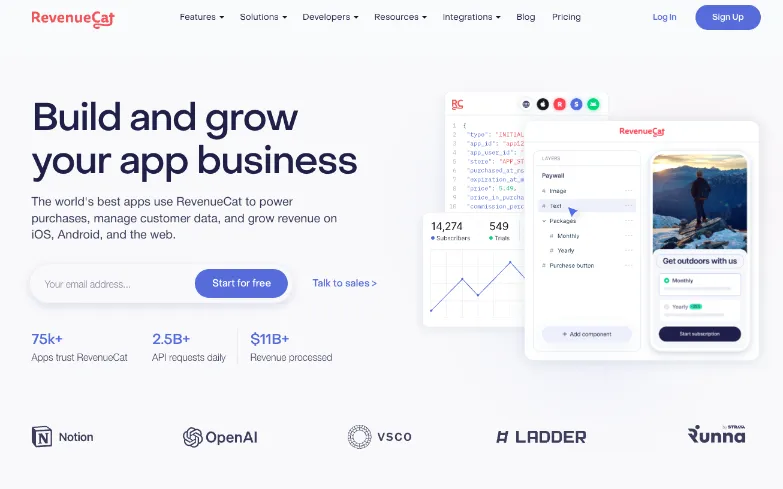
RevenueCat is the leading subscription and in‑app purchase management platform for Flutter apps. It abstracts the complexity of billing across iOS, Android, and web while providing built‑in analytics for revenue, churn, and lifetime value. Flutter teams use RevenueCat to launch subscriptions faster, experiment with paywalls, and manage entitlements without building custom backend infrastructure. RevenueCat is considered an essential tool for any Flutter app that relies on recurring revenue.
Square

Square provides in‑app payment solutions that allow Flutter developers to accept one‑time payments using cards and digital wallets. It is particularly well suited for apps that combine digital experiences with physical commerce or services. While Square is not a subscription management platform, it complements tools like RevenueCat by handling secure payment processing and checkout flows for transactional use cases.
Firebase Remote Config
Firebase Remote Config is a feature management and configuration tool that allows Flutter developers to change app behavior without requiring a new app release. It enables teams to roll out features gradually, toggle functionality on or off, run basic experiments, and respond quickly to production issues. Because it integrates seamlessly with Flutter and the broader Firebase ecosystem, Remote Config is often the first feature flagging solution adopted by Flutter teams.
Flutter DevTools

Flutter DevTools is the official debugging and performance suite provided by the Flutter team, and it has become an essential part of the Flutter development workflow. DevTools offers deep visibility into widget rebuilds, rendering performance, memory usage, network activity, and CPU profiling. As Flutter apps grow more complex, DevTools helps developers diagnose performance regressions early and understand how code changes impact runtime behavior. In modern Flutter development, DevTools is no longer just a debugging aid but also a core productivity tool.
Patrol
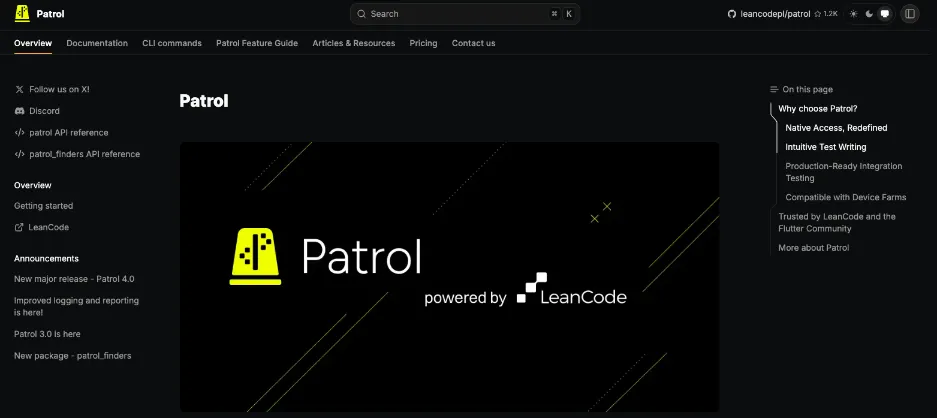
Patrol is a Flutter‑native end‑to‑end testing framework designed to make UI and integration testing more reliable and expressive. It allows Flutter developers to write tests that interact with real devices in a way that closely mirrors user behavior, while remaining compatible with modern CI pipelines. Patrol has emerged as a popular replacement for older Flutter Driver–based approaches, offering better maintainability and alignment with current Flutter testing best practices. For teams that value test reliability and production confidence, Patrol plays an increasingly important role.
Maestro
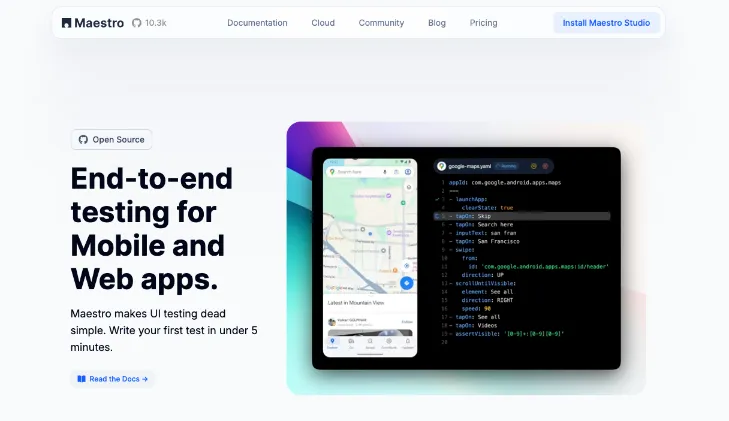
Maestro is a cross‑platform mobile UI testing tool that supports Flutter, native iOS, and Android applications. It focuses on simplicity and speed, allowing developers to write readable, declarative test flows that run consistently across devices. Flutter teams often adopt Maestro when they want lightweight end‑to‑end coverage without heavy framework overhead. Maestro is commonly used alongside CI/CD pipelines to validate critical user journeys before and after releases.
Dart Frog

Dart Frog is a lightweight backend framework built on Dart that enables Flutter developers to create server‑side APIs using the same language as their frontend. It emphasizes simplicity and fast iteration, making it well-suited for small services, internal tools, and Flutter‑first projects. By reducing context switching between frontend and backend technologies, Dart Frog helps teams prototype and ship features faster. It reflects a growing trend toward full‑stack Flutter development.
Serverpod
Serverpod is a production‑ready backend framework designed specifically for Flutter applications. It provides built‑in support for APIs, authentication, database access, and real‑time communication while maintaining strong type safety between client and server. Flutter teams use Serverpod to reduce backend boilerplate and keep business logic aligned across the stack. Serverpod is increasingly popular among teams building complex Flutter apps that require scalable backend infrastructure without sacrificing developer velocity.
Luciq
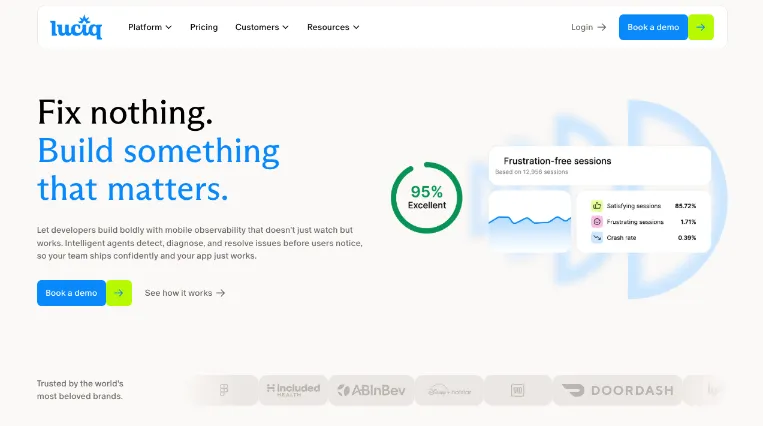
Luciq is an agentic mobile observability platform built to help Flutter teams proactively monitor, diagnose, and improve their apps across the entire development lifecycle. Instead of relying on manual dashboards and reactive alerts, Luciq uses AI agents to continuously analyze crashes, performance regressions, release health, and real user sessions. Flutter developers use Luciq to connect what they ship with how it actually behaves in production, allowing issues to be detected earlier, triaged faster, and resolved with greater confidence. By combining crash reporting, performance monitoring, session replay, and release intelligence, Luciq enables teams to focus more on building features and less on firefighting.
Scale Modern Flutter Development with Agentic Mobile Observability
Building high‑quality Flutter apps requires more than strong frameworks and fast CI/CD pipelines. It requires deep visibility into how your app behaves in the real world. As Flutter applications scale, manual monitoring and reactive debugging become bottlenecks that slow teams down and increase release risk.
Luciq’s agentic mobile observability platform helps Flutter teams close this gap by automatically detecting issues, understanding their real user impact, and guiding teams toward faster resolution. By combining AI‑driven insights with end‑to‑end visibility across performance, stability, and releases, Luciq empowers Flutter developers to ship confidently, iterate faster, and deliver better user experiences at scale.
Frequently Asked Questions
Which tools are best for Flutter development?
The best Flutter development tools depend on your team’s needs, but many teams rely on Codemagic for CI/CD, Supernova for design systems, Amplitude or Countly for analytics, RevenueCat for subscriptions, and Luciq for monitoring and observability.
Can Flutter still build iOS apps?
Yes. Flutter continues to support native iOS app development from a single codebase, with first‑class tooling for performance, testing, and deployment.