










Why Your App Observability Isn’t Working, and the Mobile Issues Traditional Tools Miss
Mobile teams today operate in an environment where user expectations are unforgiving and competition is relentless. Luciq's Mobile User Expectations 2025 survey found that 71% of users expect apps to feel “effortless,” and 58% abandon an app after a single frustrating experience, even if it never crashes. Meanwhile, the Mobile App Stability Outlook 2025 report shows that ANRs rose by 14% year‑over‑year, and app hangs remain one of the strongest predictors of low app store ratings.
Yet most engineering teams still rely on observability stacks built for backend systems, not the fragmented, device‑driven reality of mobile. Traditional mobile app crash reporting and mobile app performance monitoring - tools like Sentry, Datadog, Embrace, Firebase/Crashlytics, AppCenter, TestFairy, BugSnag, Raygun, New Relic, AppDynamics - surface symptoms, but they leave teams stuck in reactive cycles, manual debugging, and constant context switching. They simply weren’t designed for the complexity of modern mobile app observability.
Red Flag 1: Relying Only on Backend Metrics Instead of True App Observability
Backend‑centric monitoring tools track server logs and latency, but they miss the client‑side signals that define mobile UX: slow launches, frozen frames, UI hangs, navigation delays, and visual glitches. Even a single frozen frame disrupts perceived smoothness, and slow launches remain one of the strongest predictors of churn.
Luciq’s Mobile App Stability Outlook 2025 report shows that apps with excellent backend health can still experience high hang rates - 180 to 220 per 10K sessions - along with ANR spikes that directly correlate with lower app store ratings. This gap is exactly why traditional mobile app crash reporting and mobile app performance monitoring tools fall short: they surface server‑side symptoms but rarely capture the lived experience of the user.
Modern app observability requires full client‑side visibility. That means understanding not just whether a request succeeded, but how the app behaved on the device itself across different OS versions, hardware profiles, network conditions, and UI states.
Luciq’s Detect Agent supports this shift by capturing the UX signals that matter most - performance metrics, visual glitches, user interactions, and device context - so teams can see how issues actually affect users in real‑world conditions. This builds on Luciq’s deep APM and crash reporting foundation, which captures every technical event, network delay, and slow launch.
With both layers combined, teams gain a complete view of technical and experiential behavior. The Detect Agent then augments this visibility by analyzing the data to identify the “silent” killers of user retention. It goes beyond code‑level errors to automatically detect UX friction, like frozen frames, visual glitches, and non‑deterministic broken functionality.
Red Flag 2: Crash Reporting Without Context Is Not Real Mobile App Observability
Traditional mobile app crash reporting tools provide stack traces, but they rarely explain:
- What the user was doing
- Whether the issue is widespread
- How it affects revenue
- Whether it’s tied to a feature flag or release
- How frustrated users felt
The Embrace Mobile App Builders Report 2024 found that 72% of mobile engineers struggle to connect crashes to user behavior, and 58% say crash logs lack the context needed for fast debugging.
As enterprises scale, and as mobile user bases span thousands of devices, OS versions, network conditions, and regional environments, the need for contextual understanding becomes critical. It’s no longer enough to know that a crash happened; teams need systems that understand why it happened, who it impacted, how it manifested across different environments, and what it means for the business.
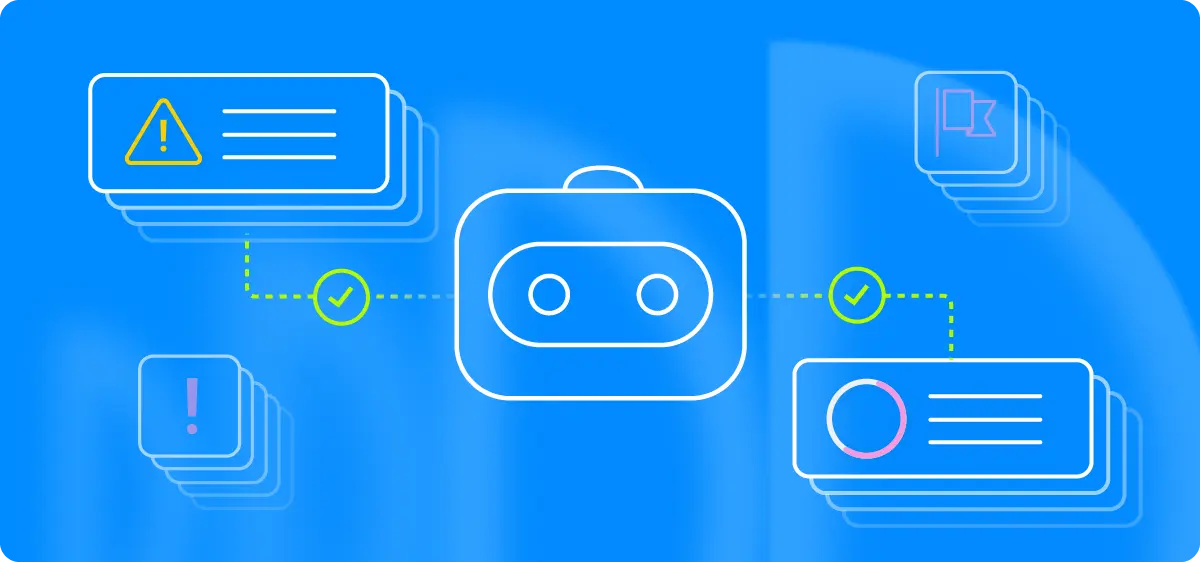
Building models that can interpret this layered context - your app’s architecture, your user flows, your release strategy, and your business priorities - becomes essential for accurate diagnosis and prioritization. This is where Luciq’s Agentic Mobile Observability platform changes the story. We don’t just report on crashes; we deploy four specialized AI agents - Detect, Triage, Resolve, and Release - to autonomously manage the entire stability lifecycle.
Luciq brings crash reporting, performance monitoring, and engagement signals into a single proactive system, eliminating the manual toil of maintenance. Each agent maps to a core pillar of how mobile teams move beyond reactive maintenance and toward continuous growth, ensuring that issues are not only spotted but solved before they ever impact your bottom line.
Red Flag 3: Manual Bug Reproduction Signals a Broken App Observability Workflow
Manual repro cycles are one of the biggest drains on engineering time. The Embrace 2024 report shows that developers lose 8 - 12 hours every week just trying to reproduce issues. And that’s before accounting for the cognitive tax: Axolo found that every interruption costs 20 - 30 minutes of lost focus, turning even simple bugs into multi‑hour detours.
This is where most teams feel the real pain of mobile app observability gaps. Traditional mobile app crash reporting tools surface the symptom, but they rarely provide the context needed to understand what actually happened across devices, OS versions, or network conditions. The result is a workflow defined by guesswork, context switching, and slow iteration: the opposite of what modern app observability demands.
Luciq approaches this differently. Instead of asking engineers to chase scattered logs, the Resolve Agent reconstructs the story automatically, capturing the user’s path, highlighting the signals that matter, and surfacing the most likely root causes. It turns what used to be hours of manual repro into a guided, context‑rich workflow. And because Resolve is part of Luciq’s broader agentic system, it works alongside Detect, Triage, and Release to eliminate the operational drag that even the best mobile app performance monitoring tools can’t address alone.
The outcome is simple: engineers spend less time retracing steps and more time building the features that move the business forward.
Red Flag 4: Slow Release Cycles Reveal Gaps in Mobile App Observability
Slow, cautious release cycles are often a sign that teams don’t fully trust their app observability stack. Legacy monitoring tools weren’t built for the realities of mobile releases; they track server‑side health but rarely integrate with the decisions teams make during rollout. Without visibility into client‑side behavior, regressions can slip through unnoticed, leaving teams to ship tentatively and hope nothing breaks.
This is where traditional mobile app crash reporting and mobile app performance monitoring tools fall short. They surface issues only after users encounter them, forcing teams into reactive rollbacks that are slow, risky, and often too late to prevent churn. The result is a release process defined by fear rather than confidence.
Modern mobile app observability demands real‑time insight into how a new build behaves across devices, OS versions, and network conditions. Luciq’s Release Agent supports this shift by tying release health directly to UX signals, highlighting regressions early, governing feature flags intelligently, and providing the guardrails teams need to move faster without sacrificing quality. Instead of waiting for user complaints or app store rating drops, teams can halt faulty builds before they spread and protect the user experience proactively.
Red Flag 5: Missing UX Signals Means Your Mobile App Observability Is Incomplete
Backend metrics can’t explain why users rage‑tap, abandon flows, or churn. Luciq’s Mobile User Expectations 2025 survey found that 64% of users stop using an app due to confusing navigation or visual defects, even when the app never crashes. This is the blind spot that traditional mobile app crash reporting and mobile app performance monitoring tools can’t fill: they capture failures, but not the friction that quietly erodes user trust.
Modern mobile app observability requires visibility into the moments that shape the user experience: session replay, frustration scoring, navigation bottleneck detection, visual glitch detection, and user interaction mapping. These signals reveal the “why” behind user behavior, not just the technical symptoms.
Luciq supports this shift by unifying UX and performance data so teams can see exactly where users struggle and why, giving them the context needed to understand not just what happened, but what it meant for the user experience. With agentic mobile observability, teams can act on these insights proactively surfacing, diagnosing, and resolving issues before users ever feel the impact.
Red Flag 6: Alert Fatigue Shows Your App Observability Stack Isn’t Intelligent
Alert storms drain engineering focus. The Logz.io Observability Pulse Report highlights persistent challenges with fragmented tooling and rising operational noise, contributing to widespread alert fatigue across engineering teams. When every spike looks urgent, nothing truly urgent stands out.
This is one of the clearest signs that an app observability stack isn’t doing its job. Traditional mobile app crash reporting and mobile app performance monitoring tools tend to fire alerts based on volume, not relevance. They surface every anomaly but rarely help teams understand which issues actually matter for users or the business. The result is a constant stream of noise that erodes trust in the alerting system and slows response times.
Modern mobile app observability requires intelligence, not just instrumentation. Luciq’s Triage Agent supports this shift by consolidating signals, removing duplicates, and prioritizing issues based on real user and business impact. Instead of reacting to every alert, teams get a clear, ranked view of what needs attention, allowing them to stay focused on the problems that genuinely move the needle.
Red Flag 7: Seasonal Traffic Spikes Expose Weak Mobile App Observability
Holiday surges expose the limitations of legacy stacks. Adjust’s Holiday App Trends highlight massive engagement spikes across shopping, gaming, and streaming, often overwhelming teams who treat peak season as a one‑off emergency rather than part of a continuous observability strategy.
But holiday traffic is only one example of the volatility mobile teams face. The mobile ecosystem itself is inherently fragmented Add in rapid release cadences and feature‑flag experimentation, and teams are constantly navigating unpredictable combinations of user environments.
When teams operate in “survival mode” (focused solely on getting through spikes or reacting to symptoms across this fragmented landscape) they lose the sustained visibility required for day‑2 operations, making it harder to iterate confidently once the surge subsides. Luciq’s Release Agent uses predictive risk scoring, automated gating, and real‑time rollback protections to safeguard revenue during high‑traffic events, and every day after.
Red Flag 8: Fragmented Tooling Breaks Cross‑Platform Mobile App Observability
Siloed iOS and Android tooling creates mismatched schemas, inconsistent metrics, and endless context switching. Instead of understanding what’s happening across their mobile ecosystem, teams spend hours reconciling data from different dashboards, SDKs, and alerting systems. This fragmentation is one of the biggest barriers to effective app observability.
Traditional mobile app crash reporting and mobile app performance monitoring tools often deepen this divide by treating each platform as a separate world. The result is duplicated work, conflicting insights, and a lack of shared truth about what users are actually experiencing.
Modern mobile app observability requires a unified view: one taxonomy, one set of metrics, one narrative that spans the full mobile stack. That includes not only iOS and Android, but also the hybrid frameworks powering today’s fastest‑growing apps, like React Native and Flutter. Luciq supports this shift by providing cross‑platform consistency through shared schemas, and native integrations with tools like Zendesk, Jira, GitHub, Slack, Asana, and more, giving teams a single source of truth so they can focus on solving problems rather than stitching data together.
Red Flag 9: Manual Rollbacks Prove Your App Observability Lacks Automation
Manual rollbacks are one of the clearest signs that an app observability stack isn’t keeping up with modern mobile development. They’re slow, error‑prone, and often triggered only after users have already felt the impact. In mobile, where app store review cycles and staged rollouts add unavoidable delays, the cost of a bad release compounds quickly. A regression that slips through can linger in production long enough to damage ratings, retention, and revenue.
Traditional mobile app crash reporting and mobile app performance monitoring tools don’t help much here. They surface issues after they’ve spread, but they rarely provide the real‑time, client‑side insight needed to catch regressions early or halt a rollout before it reaches more users. Teams end up relying on gut instinct, scattered dashboards, and manual checks to decide whether to roll back: a process that’s too slow for today’s release velocity.
Modern mobile app observability requires automation woven directly into the release pipeline; agentic mobile observability emerges naturally from this need, giving teams the intelligence and autonomy to respond before users ever feel the impact. This is where the release process shifts from reactive to proactive. Luciq’s Release Agent supports this shift by grounding rollback decisions in real‑time UX signals, impact thresholds, and feature‑flag intelligence. Instead of reacting after the damage is done, teams finally gain the guardrails to stop faulty builds early and protect the user experience before it slips.
Red Flag 10: Reactive Monitoring Instead of Preventative Mobile App Observability
Most observability stacks wait for failures before acting. But mobile teams can’t afford reactive firefighting when user expectations are this high. Users abandon apps quickly, and even small regressions can ripple across funnels, ratings, and revenue long before traditional tools surface the problem; this is where the industry is shifting.
Thanks to agentic approaches, modern mobile app observability is moving toward prevention: systems that detect early signals, understand their impact, and act before users ever feel the friction. Luciq reflect this shift by identifying issues earlier, diagnosing root causes faster, and reducing the reliance on reactive monitoring that traditional mobile app crash reporting and mobile app performance monitoring tools still depend on.
Preventative app observability isn’t about catching failures; it’s about ensuring they never reach users in the first place.
Red Flag 11: Using Disconnected Tool Categories Instead of Unified App Observability
Crash reporting tools, performance monitoring tools, and debugging utilities each provide visibility, but only in fragments. Teams jump between dashboards, reconcile conflicting metrics, and piece together user impact manually. The result is a reactive workflow shaped more by tool limitations than by what modern app observability requires.
Traditional mobile app crash reporting and mobile app performance monitoring tools weren’t designed to operate as a unified system. They excel at isolated tasks but struggle to provide a cohesive view of the mobile experience across devices, OS versions, and user journeys.
A unified approach to mobile app observability brings these signals together. Luciq organizes the entire lifecycle into a single, coherent flow:
- Detect → capture every signal
- Triage → prioritize intelligently
- Resolve → accelerate and automate fixes
- Release → prevent issues proactively
This is agentic mobile app observability: a model where the system doesn’t just watch your app, but actively supports the teams building it.
Beyond the Red Flags: The Forces Reshaping Mobile App Observability
The red flags in this article reveal why today’s observability stacks fall short, but they’re only part of a larger transformation underway. Mobile teams are facing rising user expectations, increasing ecosystem fragmentation, and growing pressure to tie technical signals directly to business outcomes. Industry research highlights several forces accelerating this shift in mobile app observability:
- AI‑powered detection and diagnosis that compresses detection, correlation, and remediation into minutes (Dynatrace, AI‑Powered Observability 2025).
- Real‑time telemetry pipelines that surface issues during active release windows rather than postmortem cycles (CIO, Why Actionable Observability Matters).
- Business‑impact‑driven scoring that connects app behavior to revenue, retention, and funnel health: 65% of organizations say observability positively impacts revenue, and 64% say it guides product roadmaps (Splunk, State of Observability 2025).
- Shift‑left practices that embed observability earlier in development and CI/CD (Hydrolix, Trends and Best Practices).
- Cross‑functional visibility that improves collaboration effectiveness by 52% (New Relic, Top Trends in Observability 2025).
- Cost‑efficient data strategies like sampling, tiered retention, and data minimization that reduce storage costs by 60–80% (CNCF, Observability Trends).
- Enterprise‑scale requirements for unified client‑to‑backend visibility, 36% cite tech‑stack complexity as their top challenge (New Relic, Top Trends 2025).
- Agentic AI that autonomously scores, triages, and initiates fixes, enabling guided remediation and CI/CD‑native automation, documented in Luciq’s own intelligence framework (Luciq).
Together, these forces point toward a single future: mobile app observability must become proactive, intelligent, and deeply integrated into the development lifecycle. Traditional mobile crash reporting and performance monitoring tools can’t deliver this. The next era requires an agentic, end‑to‑end model built for the realities of modern mobile, and Luciq is that next era.
“2026 will take us far beyond greenfield development, code analysis and research tasks to the places where most software today lives, brownfield. We'll start to see context engineering, spec driven development and agentic processes transform not just how to create new code in brownfield environments, but how we operate it, including automating bug fixes, dependency updates, refactoring and other code related tasks. It will also include the far outer loop feedback directly from how users interact with software. We'll see agentic approaches to performance regressions, experiment selection, key funnel loss and incidents begin to take shape. All of this will be in service of freeing up developer time to do the thing they do so well, crafting cutting edge digital experiences for all the rest of us,” Kenny Johnston, Chief Product Officer at Luciq.
Lead With Agentic Mobile Observability
By unifying Detect, Triage, Resolve and Release into a single agentic system: Luciq closes the loop on mobile maintenance and transforms raw signals into automated outcomes. This is the shift from reactive firefighting to autonomous, business‑aligned action, the foundation for zero‑maintenance apps, faster innovation, and effortless user experiences at scale.
App Observability FAQs
Q: What is app observability?
A: App observability is the ability to understand how an application behaves across real user environments by capturing signals like crashes, ANRs, app hangs, performance metrics, and UX friction. Modern app observability goes beyond backend logs to include client‑side behavior, device context, and user interactions.
Q: Why does app observability often fail on mobile?
A: Most observability stacks were built for backend systems, not the fragmented, device‑driven nature of mobile. Traditional mobile app crash reporting and mobile app performance monitoring tools surface symptoms but miss UX signals like frozen frames, navigation delays, and visual glitches.
Q: How is mobile app observability different from backend monitoring?
A: Backend monitoring focuses on server logs and latency, while mobile app observability captures what users actually experience on their devices, including slow launches, UI hangs, ANRs, and device‑specific performance issues.
Q: Why do mobile teams still rely on crash reporting tools?
A: Crash reporting tools like Sentry, Raygun, New Relic, and AppDynamics are familiar and easy to deploy, but they lack the context needed for fast debugging. They don’t capture user behavior, UX friction, or the full client‑side environment.
Q: What are the signs that your app observability stack is broken?
A: Common red flags include manual bug reproduction, slow release cycles, alert fatigue, missing UX signals, fragmented tooling, and reactive firefighting instead of prevention.
Q: What causes ANRs and app hangs, and why do traditional tools miss them?
A: ANRs and app hangs are often caused by main‑thread blocking, slow I/O operations, deadlocks, rendering delays, and device‑specific performance constraints. Traditional tools miss these issues because they focus on crashes and server‑side metrics, not the client‑side execution paths and UX signals that reveal when the UI becomes unresponsive.
Q: How can mobile teams prevent crashes, ANRs, and app hangs before they reach users?
A: Prevention requires real‑time visibility into client‑side behavior, early detection of performance regressions, and automated analysis of UX signals. Agentic mobile observability enables this by detecting early warning signs, correlating them with device and OS context, and guiding or automating fixes before users encounter the issue.
Q: Why is unified app observability better than using separate crash reporting and performance tools?
A: Using separate tools creates fragmented data, inconsistent metrics, and manual correlation work. Unified app observability brings crash reporting, performance monitoring, UX signals, and release intelligence into a single system, giving teams a complete picture of user impact and enabling faster, more accurate diagnosis and prevention.
Q: How does agentic mobile observability improve app stability?
A: Agentic mobile observability uses intelligent agents to detect issues, analyze root causes, prioritize based on user impact, and guide or automate fixes. This shifts teams from reactive monitoring to proactive prevention.
Q: What tools are included in Luciq’s agentic mobile observability platform?
A: Luciq unifies four intelligent agents - Detect, Triage, Resolve, and Release - to capture every signal, prioritize intelligently, accelerate fixes, and prevent regressions before they reach users.