











The industry rushed to crown AI as the savior of the software development lifecycle and in doing so overlooked a fundamental law of data science: a model is only as reliable as the features that feed it.
For mobile engineering teams, the Action Gap, which is the distance between detecting a crash and actually resolving it, is widening. Not because we lack data, but because we are feeding sophisticated agents Shallow Signals: fragmented, low-dimensional, and noisy telemetry that strips away the context needed to act.
This ebook argues that while Data is King, Context is Queen. In the high-stakes world of mobile observability, the Queen is the most strategic piece on the board. She turns raw telemetry into actionable intelligence and probabilistic guesswork into a verifiable fix.
We move beyond traditional monitoring to examine how a decade of mobile-first SDK heritage allows Luciq to power true Agentic Workflows. By feeding our Detect, Triage, Resolve, and Release agents a multi-dimensional Ground Truth, from W3C trace IDs to full XML view hierarchies, we enable a shift from reactive observation to autonomous resolution.
Chapter 1: The Death of the "Shallow Signal"
Enterprises are investing heavily in AI coding assistants. Code is produced faster than ever, yet business outcomes remain stubbornly flat: sprint velocity stalls, release cycles drag, and customer satisfaction is stagnant.
The result is productivity theater. Developers report feeling faster with AI tools, yet organizational metrics remain unchanged. This illusion of progress is reinforced by loud productivity: a flurry of visible signals such as pull requests, lines of code, and green builds that mask the absence of real customer value.
Agentic workflows redefine that model by governing how work moves from detection to prevention. Mobile app observability provides the signals and context that make these workflows effective. Together, they shorten the distance between code and customer experience, allowing teams to spend less time maintaining systems and more time building products that matter.
This blueprint is organized around the agentic loop: detect → triage → resolve → prevent, with each chapter showing how leaders can move beyond monitoring to autonomy, and beyond fixing to building.
The Stochastic Gap
For mobile engineering teams, the gap between detection and resolution is widening. We detect a crash, and that is the data. But we often cannot see the why, and that is the context. This is what I call the Stochastic Gap.
Stochastic Gap: In data science, a stochastic process is governed by probability and randomness. When we feed agents Shallow Signals, we create a Stochastic Gap, which is a void where the agent lacks the multi-dimensional context to be certain. It is forced to guess, to hallucinate, or to offer "maybe" solutions. To move to true Agentic Observability, we close that gap with Ground Truth, turning a probabilistic "maybe" into a reliable "fix."
Without Ground Truth, which includes the full XML view hierarchy, the W3C trace IDs, and the breadcrumbs of user intent, an agent is forced to hallucinate. It is trying to solve a three-dimensional problem with a one-dimensional signal.
Context is Queen
If data is the raw material, context is the governing logic.
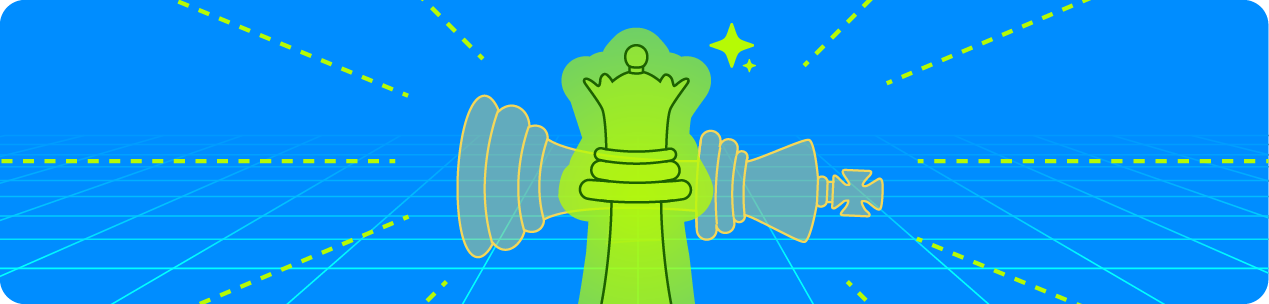
In chess, the King is the piece you protect. The Queen is the piece you deploy. She is the most strategic, versatile, and powerful force on the board and the one who turns a defensive position into a winning move.
In mobile observability, Context is the Queen. She is the difference between an agent telling you "something is wrong" and an agent saying "here is the verifiable fix."
The era of the Shallow Signal is over. Stop watching things break. Let the Queen run the board.
Chapter 2: The High-Dimensionality of a Crash
Why a Stack Trace Is a One-Dimensional Ghost of a Three-Dimensional Problem
In my days as a data scientist, we lived and died by the State Vector. To predict the trajectory of an object or the behavior of a user, you need every relevant dimension: velocity, position, time, and intent. Remove one, and your model did not become less accurate. It became fundamentally broken.
Mobile engineering has spent a decade trying to solve three-dimensional problems with one-dimensional data.
State Vector: A State Vector is a mathematical representation that encapsulates all the information needed to describe a system at a specific point in time. In mobile observability, a state vector is not just a stack trace. It is the combination of the user's last five actions, the memory pressure on the device, the API response latency, and the current UI hierarchy.
Dimensionality Loss: What the Stack Trace Does Not Tell You
When a mobile app crashes, most legacy SDKs surface a stack trace. To a developer, this feels like Ground Truth because it tells you the exact line where the process terminated.
From a data science perspective, however, a stack trace is a victim of Dimensionality Loss. Imagine reconstructing the Great Wall of China from its shadow on the ground. The shadow tells you the outline, but it strips away depth, material, and structural integrity. A stack trace is that shadow. It is a one-dimensional point-in-time signal that tells you what happened at the moment of impact while ignoring the entire State Vector leading up to it:
- The UI State: what was actually rendered on screen?
- The network conditions: was there a latent 404 hiding behind a successful 200 response?
- The user's intent: what sequence of actions led here?
When we rely solely on fixed-point data, such as "it crashed at line 42," we are trying to solve a high-dimensional human experience with a low-dimensional technical log.
The Queen's Gambit: Restoring the Lost Dimensions
If the stack trace is the King, essential and foundational but stationary, the Queen is the Sequential User Path.
By integrating Session Replay and XML View Hierarchies, we restore the lost dimensions and move from a point in time to a vector of movement.
- The XML Hierarchy provides the structural skeleton.
- Session Replay provides the visual layer, which is what the user actually saw.
- W3C Trace IDs provide the nervous system connecting frontend behavior to backend causality.
When you combine these, you move from probabilistic, where the agent guesses why the crash happened, to full-fidelity, where the agent sees the exact misalignment or broken state.
The Blind Spot: Why "Functional" Data Is Not Enough
Traditional observability SDKs catch things that break in ways a computer understands. But users do not abandon apps only because of crashes. They leave because of Visual Abnormalities and broken flows.
A button hidden behind a banner is not a crash in the logs. The code is technically running, but to the user, the app is dead. A Login button that routes to a Help page is not an Error 500, but it is a failure of intent. Standard telemetry is blind to these failures because it has no eyes.
The Detect Agent: Your Team's Eyes at Scale
Luciq's Detect Agent uses Session Replay screenshots to identify non-deterministic issues and treats the mobile interface as a visual landscape. Using sophisticated prompting, it functions as a Digital Human Eye, understanding the difference between a deliberate UI choice and a defect, including the distinction between a broken field and one that is masked for PII. It identifies:
- Visual issues: misaligned buttons, UI jank, and ghost elements.
- Broken functionality: sequential anomalies where the user's action leads to an illogical screen state.
By benchmarking against human-engineered datasets, the Detect Agent minimizes false positives. It does not just see pixels. It understands the State Vector behind them. When this high-dimensional context flows into the Resolve Agent, a "maybe" becomes a reliable fix.
The SDK as a High-Fidelity Feature Store
For a decade, the industry treated the Mobile SDK as a digital janitor, a background process that swept up crashes and logged them into a dusty database. In the age of Agentic Workflows, that definition is obsolete.
To an AI agent, raw data is noise. To be effective, an agent needs features, which are transformed, high-signal variables that represent the Ground Truth of a moment. At Luciq, we have spent ten years not just collecting data but performing Edge Feature Engineering.
From Monitoring to Edge Feature Engineering
Traditional monitoring asks: is the app broken? Edge Feature Engineering asks: what is the complete State Vector required for an agent to resolve this?
We have optimized the signal-to-noise ratio over a decade so that when an agent queries the system, it does not receive a Data Swamp. It receives a curated, high-dimensional dataset ready for inference.
The Multi-Modal Edge: Beyond the Text Box
Generic LLMs are often trapped in a text-only vacuum, but a mobile app is a multi-modal experience. To close the Stochastic Gap, our agents consume a Multimodal Context built on three pillars:
- Structural, which is the skeleton: the XML View Hierarchy tells the agent exactly what elements existed, including those not visible on screen.
- Temporal, which is the nervous system: W3C Trace IDs connect the frontend experience to the backend cause and provide a timeline of causality.
- Visual, which is the eyes: Session Replay screenshots allow the agent to see UI jank and alignment issues that no log could ever capture.
Combining these three moves us from low-fidelity RAG to high-fidelity Agentic Logic.
The Protocol Question: MCP, CLI, and Why the Debate Misses the Point
A debate has taken root among engineering teams building agentic workflows: Model Context Protocol or Command Line Interface? Which one should power your agents?
The Model Context Protocol, introduced by Anthropic in 2024, became the fastest-adopted standard RedMonk has ever seen, with adoption by OpenAI, Google DeepMind, Microsoft, and AWS making it a near-universal expectation in agentic tooling. At the same time, a counter-argument has emerged. A typical MCP server dumps its entire schema into an agent's context window, including tool definitions, parameter descriptions, and authentication flows, consuming roughly 55,000 tokens before a single question is asked.
CLI tools like gh, aws, and kubectl already exist, are battle-tested, and produce structured output that language models parse efficiently. Some developers report MCP consuming up to 72% of the available context window before work even begins.
It is a genuine engineering tradeoff. The most capable agent systems are quietly converging on using both transports simultaneously, choosing per tool integration rather than committing to one approach at the system level.
But here is what both sides of the debate tend to miss: the protocol is not the variable that determines whether your agent resolves an issue or hallucinates one. The data is.
A CLI with shallow signals produces a fast, wrong answer. An MCP integration with shallow signals produces a structured, wrong answer. Neither closes the Action Gap. The protocol debate is a conversation about plumbing. The context debate is a conversation about whether your agents have what they need to actually think.
Choose your transport based on your workflow. Build your context like your agents depend on it. They do. Because the Queen does not care which road she travels. She cares about the board she is playing on. Give her shallow signals and she guesses. Give her Ground Truth and she wins.
The Evolution from RAG to the Resolve Agent
In the early days of AI implementation, we relied on RAG, which stands for Retrieval-Augmented Generation. We would take a crash, search for similar stack traces in a vector database, and hope the agent could generate a fix based on past patterns. It was better than nothing, but it was still probabilistic. It was searching, not solving.
The Resolve Agent represents a different paradigm. Instead of searching for similar answers, it utilizes the Full State Vector, feeding the agent the precise intersection of the user's codebase, the specific stack trace, and real-time session metadata through a tool-use workflow powered by Claude Code. The agent does not guess. It reasons through the logic.
The Resolve Agent is only as powerful as the data it consumes. It works because the SDK has already done a decade of feature engineering, cleaning telemetry and structuring context, before the agent begins its task.
Measuring Truth: The Benchmarking Behind the Claim
Context is not a buzzword. It is a variable we optimize. We benchmark our Detect and Resolve agents against human-engineered datasets, comparing AI findings against the judgment of veteran mobile engineers. We calculate:
- Precision: how often the agent's proposed fix is actually correct.
- Recall: how many real bugs the Detect Agent successfully surfaces.
- F1 Score: the harmonic mean that ensures our context is producing objective, repeatable accuracy and not lucky guesses.
We have not built a smarter tool. We have built a more verifiable one. The goal is not more data. It is more truth.
Chapter 4: The Agentic Engine
Closing the Action Gap with Contextual Density
In the traditional software lifecycle, there is a painful and expensive void known as the Action Gap. It is the distance between the moment a bug occurs and the moment a fix is deployed.
In the Data King era, we tried to close this gap with more dashboards. But dashboards are passive. They require a human to interpret the signal, perform log archaeology, and manually bridge the gap to a resolution. At 3 AM on a Tuesday, when a checkout bug hits your flagship app, that gap is not a technical delay. It is a revenue leak.
To move from Observability, which is watching things break, to Resolution, which is fixing them, you need more than data. You need Inference Integrity.
Inference Integrity: Inference Integrity is the measurable certainty that an agent's output is grounded in the absolute Ground Truth of a specific system state and not a probabilistic approximation from general patterns. It is the state where an agent's reasoning is so tightly coupled with high-fidelity, multi-dimensional context that the resulting action is reproducible, accurate, and safe.
The Action Gap Paradox: Read-Only AI Is Not Enough
Most AI tools in the modern DevOps stack are Read-Only. They summarize a stack trace or search for a similar error in a vector database. RAG was a step forward, but it remains inherently probabilistic. It is a high-speed search engine saying: I found something that looks like this, so maybe this fix will work.
In mobile engineering, "maybe" is not good enough. A probabilistic guess leads to hallucinations, regressions, and broken builds. To close the Action Gap, we must move from search to reasoning.
Four Agents, One Closed Loop
We have replaced the friction of manual triage and investigation with four autonomous agents that operate at the edges of your development workflow:
- Detect Agent: uses Session Replay screenshots and sophisticated prompting to identify silent killers like UI jank, frozen frames, and broken flows that traditional tests and telemetry are blind to.
- Triage Agent: collapses the distance between signal and prioritization by intelligently grouping thousands of raw events into a single actionable incident.
- Resolve Agent: correlates the crash with your specific codebase history to generate a validated Pull Request, cutting resolution time from days to minutes.
- Prevent Agent: once a fix is approved, it manages App Store submissions and executes a phased rollout with an Autopilot safety net that can trigger an instant rollback if needed.
The Weight of Intelligence: What the Infrastructure Gap Means for Your Agents
There is a conversation happening at the infrastructure level that most observability vendors are not addressing. They probably should be.
AI's compute demand has grown at more than twice the rate of Moore's Law over the past decade. The physical world is struggling to keep pace. 72% of data center executives consider power and grid capacity to be very or extremely challenging constraints on AI infrastructure build-out. Grid connection requests in key regions like Northern Virginia are taking four to seven years to fulfill. Goldman Sachs Research forecasts global data center power demand will grow 50% by 2027 and as much as 165% by the end of the decade.
This is not a reason to question whether AI will continue to advance. It will. But it is a reason to ask a harder question: as computing power becomes more constrained and more expensive, what happens to agents built on shallow, noisy data?
Agents burning through context on low-signal telemetry become a liability rather than an asset. Every hallucination, every re-run, and every failed inference cycle is a compute cost. In a world where power grid connections take years and GPU availability determines competitive positioning, that waste is strategic failure.
When your agents are grounded in high-fidelity, multi-dimensional Ground Truth, they do not waste compute chasing probabilistic guesses. They reason precisely, act once, and resolve. As the infrastructure race intensifies, the teams that win will not be the ones running the most agent calls. They will be the ones running the most efficient ones.
Context is not just the Queen of the observability board. In a resource-constrained AI future, she is the most efficient piece in play.
The New Gold Standard: Inference Integrity
In the Data King era, the industry optimized for uptime and ingestion. In the age of agents, those metrics are table stakes. The new gold standard is Inference Integrity: the difference between an agent that tells you what might be wrong and an agent that has the data-backed authority to fix it.
That 3 AM crisis is no longer a pager-duty nightmare. It is a background task. By letting the Queen run the board, we have turned watching into doing.
- The four-agent loop, which covers Detect, Triage, Resolve, and Release, is not four tools. It is one closed workflow. Evaluate vendors on the full loop, not individual features.
- Inference Integrity is measurable. Ask your vendors for Precision and F1 benchmarks on their resolution outputs before trusting them in production.
- As compute costs rise, context efficiency becomes a business decision. Agents grounded in high-fidelity data resolve issues in fewer cycles. That is not just better engineering. It is better economics.
Chapter 5: The 10-Year Moat
In the sudden gold rush of GenAI, new observability tools are appearing overnight. They promise AI-powered insights by plugging a standard LLM into an existing log stream. As a data scientist, I know what this is: AI is a commodity, and Curated Context is the asset.
The Data Cold Start problem
In machine learning, a cold start happens when a system lacks enough historical data to make accurate inferences. For the new wave of wrapper-AI startups, every mobile crash is a cold start. They do not understand why a background thread is blocking on an Android 14 device with low battery, or why a specific gRPC failure is unique to a certain region's network latency, i.e. you cannot prompt-engineer your way out of a Data Cold Start.
They are trying to build a Queen without a board to play on.
Ten Years of Edge Feature Engineering
At Luciq, our advantage is that we have spent a decade performing Expert Feature Engineering at the mobile edge.
- We have not just been collecting data. We have been mapping the edge cases: NDK crashes, OOMs, complex UI jank, and gRPC failures unique to specific network environments.
- Our SDK is not a legacy log-grabber. It is a High-Fidelity Feature Store grounded in the nuances of mobile reality.
When our agents perform an inference, they are not starting from zero. They are standing on a decade of structured telemetry. The winner in the AI era will not be the one with the biggest model. It will be the one with the richest, and most, reliable context
From Watching to Doing
For twenty years, we have been Data Collectors, obsessing over the volume of our lakes and the speed of our ingestion. We crowned Data as King and in doing so built ourselves into a corner of noise and diminishing returns.
The age of agents demands a new sovereign.
To bridge the Stochastic Gap and move from "maybe" to "fixed," your team must stop being a passive observer and start being a Context Architect. A Data Collector asks: how much can we store? A Context Architect asks: how much integrity does this signal provide to my agents?
The transition to Agentic Mobile Observability is not a tech stack upgrade. It is a shift in engineering philosophy. Data is still the raw material, the King if you will, but Context is the Queen who actually runs the board.
Stop collecting. Start resolving.
Epilogue: The Queen Was Always There
By Rana Elhawary, Senior Wordsmith and Communicator, Luciq
Editing this ebook brought me back to a question I first encountered at seventeen, studying how societies work and how meaning is actually produced.
The theorists I was reading then, Saussure, Barthes, Derrida, and Kuhn, were all in their different ways pulling at the same thread: what holds the relationship between a thing and its meaning together? And what happens when that scaffolding is removed?
I did not expect to find that question living inside a mobile observability ebook. But here it is.
What Andrea has written is not simply a technical argument. It is an epistemological one. A meditation on the conditions under which knowledge becomes actionable and a diagnosis of what goes wrong when we mistake the accumulation of raw material for the production of meaning.
Thomas Kuhn taught us that knowledge does not progress incrementally. It operates faithfully within a framework until the anomalies accumulate and the framework can no longer hold them. Then it breaks. What looked like arrival reveals itself, in retrospect, to have been a very sophisticated form of not-yet-knowing. The coronation of Data as King was one of these moments. The promise was simple: collect enough, and meaning will emerge. But without the governance of meaning, the Data Lake became a Data Swamp. The thesis had generated its own antithesis.
What the architects of the data paradigm were rediscovering, unknowingly, was something structuralist and post-structuralist thinkers had already mapped a century earlier. Saussure showed us that a sign is not a self-contained unit of meaning. It is a relationship between the signifier and the signified, and that relationship is not intrinsic. It is produced by context, by the system of differences that surrounds it. Derrida pushed this further: meaning is always deferred and always dependent on what surrounds a sign. Tear it from its relational web and meaning does not diminish. It dissolves.
This is the Stochastic Gap. A crash log is a signifier. Without the session replay, the user's journey, and the breadcrumbs of intent, the signified is absent. The agent handed these shallow signals is not reasoning from incomplete information. It is trying to read a text from which most of the words have been removed.
Closing that gap is not a technical refinement. It is a paradigm shift.
Context is the Queen: the relational logic that makes the King mean anything at all. The era of the shallow signal is not ending because we ran out of data. It is ending because we finally understand what data, on its own, cannot do.
The Queen was always there. We just were not ready to see her.
Citations and References
External Sources
- Bain and Company, Technology Report 2025. "How Can We Meet AI's Insatiable Demand for Compute Power?" https://www.bain.com/insights/how-can-we-meet-ais-insatiable-demand-for-compute-power-technology-report-2025/
- Deloitte, 2025 AI Infrastructure Survey. "AI Data Centers Jolt Power Demand." https://www.deloitte.com/us/en/insights/industry/power-and-utilities/data-center-infrastructure-artificial-intelligence.html
- RAND Corporation, 2025. "AI's Power Requirements Under Exponential Growth." Pilz, Konstantin F., Yusuf Mahmood, and Lennart Heim. https://www.rand.org/pubs/research_reports/RRA3572-1.html
- Goldman Sachs Research, 2025. "AI to Drive 165% Increase in Data Center Power Demand by 2030." https://www.goldmansachs.com/insights/articles/ai-to-drive-165-increase-in-data-center-power-demand-by-2030
- International Energy Agency, 2025. "Energy Demand from AI." https://www.iea.org/reports/energy-and-ai/energy-demand-from-ai
- S&P Global, 2025. "AI's Global Resource Race: Challenges and Opportunities." https://www.spglobal.com/en/research-insights/special-reports/look-forward/data-center-frontiers/global-ai-power-demand-challenges-opportunities
- RedMonk, December 2025. "10 Things Developers Want from their Agentic IDEs in 2025." Holterhoff, Kate. https://redmonk.com/kholterhoff/2025/12/22/10-things-developers-want-from-their-agentic-ides-in-2025/
- Reinhard, Jannik, February 2026. "Why CLI Tools Are Beating MCP for AI Agents." https://jannikreinhard.com/2026/02/22/why-cli-tools-are-beating-mcp-for-ai-agents/
- AI Productivity, March 2026. "The MCP vs. CLI Debate: Why Developers Are Questioning the Protocol Hype." https://aiproductivity.ai/news/mcp-vs-cli-debate-ai-agents/
- Manveer C., March 2026. "MCP vs. CLI for AI Agents: When to Use Each." https://manveerc.substack.com/p/mcp-vs-cli-ai-agents
- The New Stack, December 2025. "AI Engineering Trends in 2025: Agents, MCP and Vibe Coding." https://thenewstack.io/ai-engineering-trends-in-2025-agents-mcp-and-vibe-coding/
- OneUptime, February 2026. "Why CLI is the New MCP for AI Agents." https://oneuptime.com/blog/post/2026-02-03-cli-is-the-new-mcp/view
Luciq Platform & Documentation
- Luciq Platform. "Observability - Detect Agent." https://www.luciq.ai/platform/observability
- Luciq Platform. "Intelligence - Triage Agent." https://www.luciq.ai/platform/intelligence
- Luciq Platform. "Resolution - Resolve Agent." https://www.luciq.ai/platform/resolution
- Luciq Platform. "Prevention - Prevent Agent." https://www.luciq.ai/platform/prevention
- Luciq Docs. "Session Replay." https://docs.luciq.ai/product-guides-and-integrations/product-guides/session-replay
- Luciq Docs. "Session Replay - Video-Like Replay." https://docs.luciq.ai/product-guides-and-integrations/product-guides/session-replay/video-like-replay
- Luciq Docs. "Detect Agent - Visual Issues." https://docs.luciq.ai/product-guides-and-integrations/product-guides/ai-features/detect-agent/visual-issues
- Luciq Docs. "Detect Agent - Broken Functionality." https://docs.luciq.ai/product-guides-and-integrations/product-guides/ai-features/detect-agent/broken-functionality
- Luciq Docs. "Resolve Agent." https://docs.luciq.ai/product-guides-and-integrations/product-guides/ai-features/resolve-agent
- Luciq Docs. "Resolve Agent - AI Debugging Assistant." https://docs.luciq.ai/product-guides-and-integrations/product-guides/ai-features/resolve-agent/ai-debugging-assistant#overview
- Luciq Docs. "Luciq MCP Server - Setup by IDE (Claude Code)." https://docs.luciq.ai/product-guides-and-integrations/product-guides/ai-features/luciq-mcp-server/setup-by-ide#claude-code
Luciq Blog
- Luciq Blog. "Mobile App Observability Workflow Problem." https://www.luciq.ai/blog/mobile-app-observability-workflow-problem
- Luciq Blog. "Agentic AI Workflows for Mobile Engineering." https://www.luciq.ai/blog/agentic-ai-workflows-mobile-engineering
- Luciq Blog. "Mobile App Observability - Green Dashboards." https://www.luciq.ai/blog/mobile-app-observability-green-dashboards
- Luciq Blog. "Best Agentic AI Observability Tools." https://www.luciq.ai/blog/best-agentic-ai-observability-tools
- Luciq Blog. "Luciq vs. Bitdrift - Agentic Mobile Observability." https://www.luciq.ai/blog/luciq-vs-bitdrift-agentic-mobile-observability
- Luciq Blog. "Mobile Observability - What It Is and Why It Matters in the Age of AI." https://www.luciq.ai/blog/mobile-observability-what-it-is-and-why-it-matters-in-the-age-of-